
From Twitter to tokamaks: Chris Sacca’s big bet on fusion
31 October 2025
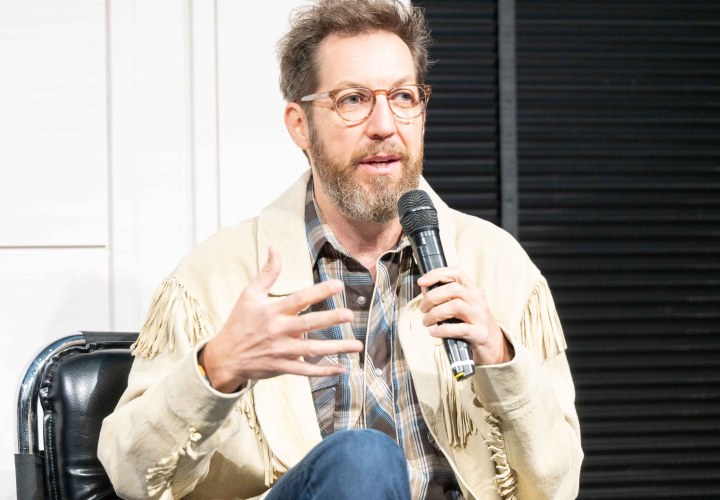
Chris Sacca quit venture investing at the height of his success. After returning 214x on investors’ capital through Lowercase Capital with early bets on Twitter, Uber, Instagram and Stripe, he walked away. “People were shocked. But for us, it wasn’t worth it anymore,” Sacca told FusionX during FusionX:APAC in Tokyo. The reason: Sacca and his wife, who co-founded the firm, could no longer generate enthusiasm for “another dating app or gaming platform.” Venture investing requires long-term commitment. “When you invest, it’s a 15-year relationship, it’s like a marriage. You’re building with that company through highs, lows, hiring, product, and crises,” Sacca explained. Without genuine interest in the mission, that commitment becomes unsustainable.
This realisation led Sacca to investigate whether the exponential improvements that transformed software were emerging in energy and physical technologies. He began investing family money to test whether clean energy could compete on market economics alone, without subsidies or regulatory support, ultimately founding Lowercarbon Capital, now the most prolific private sector investor in fusion through its Q>1 fund. “I’m a capitalist. I have no allergy to making money. This isn’t charity,” Sacca said. Lowercarbon Capital requires every investment to deliver both gigaton-scale carbon impact and substantial financial returns. “We’re not asking for ‘green’ money; we’re going after oil and gas money and beating its returns.” The economics ultimately favour clean energy, according to Sacca: “Carbon is expensive. Burning fossil fuels is expensive and dangerous. The sun – whether natural or artificial through fusion – is cheaper.”
Sacca initially shared widespread scepticism about fusion, having heard the “fusion is 30 years away, and always will be.” Lab visits revealed a different picture: Q values were improving sharply. “The community was collaborative, not cutthroat. CEOs of competing fusion companies were introducing us to each other,” Sacca noted. The atmosphere resembled the early internet era, with companies supporting rather than undermining each other. This observation prompted the launch of what Sacca describes as “the first fund in history dedicated solely to fusion,” making the firm the most active fusion investor globally through its Q>1 fund.
The Q>1 portfolio includes multiple fusion approaches, and Sacca insists represents market conviction rather than hedging. “This is an industry, not a single product,” he said. Different applications require different fusion solutions: grid power, industrial baseload, portable units, aerospace applications, peaker plants, off-grid sites and military logistics. This diversity ensures multiple technical pathways will succeed. Lowercarbon is also looking to invest across the supply chain, magnets, superconducting tape and components. “Fusion isn’t a one-company game; it’s a full industrial ecosystem,” Sacca said.
The window for venture-scale returns in fusion is limited, Sacca believes. “We probably have 4-5 years left of venture-scale returns in fusion before project finance takes over,” he predicted. He compared fusion’s trajectory to solar and wind, now financed by institutionals comfortable with predictable returns. Fusion however offers the last opportunity in energy for “25x to 500x returns”. “These companies are still undervalued. The data has changed, but capital hasn’t caught up. That’s where I like to be – when an industry is mispriced but technically proven,” he said. While many anticipate technical milestones as fusion’s breakthrough moment, Sacca focuses on commercial viability. “What matters are commercial contracts,” he stated. The turning point will arrive when major power buyers, corporations and hyperscalers, sign bankable, long-term power purchase agreements. “It shows confidence, validates the economics, and attracts talent. Once companies start hiring because they’ve signed billion-dollar energy deals, everything accelerates. Fusion becomes a business, not an experiment.”
Sacca views fusion as “the most important inflection point in human history, technically, economically, and morally.” Energy infrastructure underpins artificial intelligence, economic development and climate resilience. He sees delivering abundant clean power as both an entrepreneurial opportunity and moral imperative. “Fusion unlocks everything: desalination for entire continents, abundant clean energy, and the foundation for human progress,” he said. His assessment was direct: “Fusion is not science fiction anymore, it’s the next industrial revolution. And it’s time to build it.”
Country/Region: USA
Tags: Lowercarbon Capital